Rooted and Rising: The Canadian Creatives Proving You Don't Need Hollywood to Make It
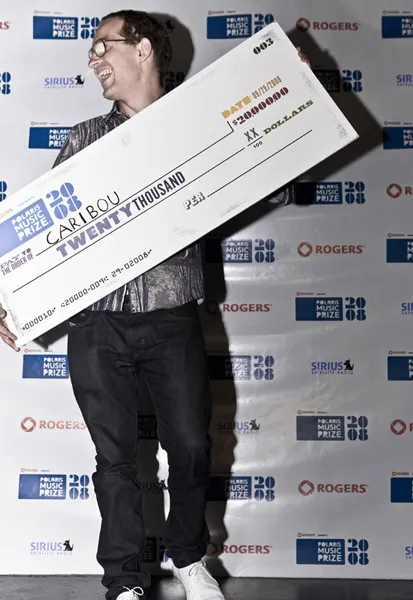
Photo: Dustin Rabin Photography, FAL, via Wikimedia Commons
Ask almost any Canadian artist from a previous generation about their career trajectory and you'll hear some version of the same story: you grind it out at home, build a bit of a profile, and then — if you're serious — you move to Los Angeles or New York. The implication was always that Canada was a launching pad, not a destination. A place you left on your way to somewhere that mattered.
That narrative is getting a serious revision.
Across music, comedy, film, and digital content creation, a growing number of Canadian artists are making the deliberate choice to build their careers entirely within the domestic ecosystem — and not just surviving, but genuinely thriving. They're not settling. They're strategizing.
The Business Case for Staying
Let's start with the practical stuff, because that's where the real story lives.
Canada's arts funding infrastructure is, frankly, the envy of most countries. FACTOR (the Foundation Assisting Canadian Talent on Recordings) provides grants to Canadian musicians for recording, touring, and marketing. The Canada Council for the Arts funds everything from theatre to digital media. Provincial arts councils layer on additional support. For a working artist who knows how to navigate these systems, the financial picture looks meaningfully different than it does for a counterpart trying to break through in a city like LA with no safety net and astronomical living costs.
That's not a small thing. Stability — even modest, grant-funded stability — creates the conditions for creative risk-taking. And creative risk-taking is where interesting careers get built.
Comedian and podcast host Tally Abecassis, who built her audience in Montréal before expanding nationally, has talked openly about how the Canadian comedy circuit gave her room to develop material over years without the pressure of needing to be "ready" on someone else's timeline. The club circuit from Halifax to Vancouver, regional festivals like the Winnipeg Comedy Festival and JFL42 in Toronto, and a robust podcast ecosystem have created real infrastructure for comedians who want to grow on their own terms.
Music Made in Canada, Heard Around the World
The Canadian music industry has its own version of this story, and it's playing out in genres you might not expect.
The country music scene centred in Alberta — particularly around Calgary and Red Deer — has developed into a legitimate regional powerhouse. Artists like Tenille Townes and Jade Eagleson built substantial careers through Canadian radio, touring, and the CCMA Awards circuit before crossing over to American markets. Crucially, they built those careers on Canadian terms first, with Canadian fanbases and Canadian industry relationships anchoring them.
In hip-hop and R&B, Toronto's scene has obviously produced global names — but beneath the Drake-level stratosphere, there's a thriving mid-tier of artists doing real numbers through domestic streaming, Canadian festival circuits, and community-rooted marketing strategies. Artists working with Canadian distributors like Entertainment One and building on platforms like CBC Music's emerging artist programming are finding that the domestic market, properly cultivated, can sustain a genuine career.
The math matters here. Canada has 40 million people. If you build a dedicated fanbase of even a fraction of one percent of that population, you're talking about tens of thousands of engaged listeners — enough to fill venues, move merchandise, and sustain a working musician's livelihood without ever needing to chase a US radio add.
The Digital Layer Changes Everything
None of this is happening in isolation from the broader digital content economy, and the creators who are thriving domestically are almost universally fluent in leveraging online platforms alongside traditional industry pathways.
YouTubers, TikTok creators, Substack writers, and podcast hosts are building audiences that are technically global but often deeply rooted in Canadian identity and experience. Content that speaks specifically to Canadian life — the particular texture of winters in Winnipeg, the specific culture of a Québec sugar shack, the experience of growing up in a small BC town — finds its audience both at home and among the Canadian diaspora abroad.
This is the Canada Kim sweet spot, honestly: content that's proudly specific to where we live, in a way that actually makes it more resonant, not less.
Filmmaker and content creator Amar Wala, who has built a career examining South Asian-Canadian identity through documentary and digital media, has spoken about the freedom that comes from being explicitly Canadian in your creative framing. "When you stop trying to be universal and start being specific," he's noted in various interviews, "that's when people actually connect with what you're making."
The Hubs Where It's Happening
If you want to understand where Canadian creative careers are being built, a few cities deserve particular attention.
Toronto remains the undisputed centre of the English-Canadian entertainment industry, with production companies, talent agencies, and industry events concentrated enough to create genuine networking density. The Toronto International Film Festival isn't just a showcase — it's an annual reminder that Canadian film culture is taken seriously on the world stage, and it creates real opportunities for emerging filmmakers to connect with industry decision-makers.
Vancouver's production industry — long dominated by American studios using the city as a filming location — is increasingly generating homegrown projects with Canadian creative leadership. The shift is gradual but real.
Montréal sits in its own category: a bilingual, bicultural creative hub where the Québécois entertainment industry (one of the most robust per-capita in North America) intersects with an English-language scene that's smaller but scrappy and inventive. For artists comfortable operating in both linguistic worlds, Montréal offers creative opportunities that genuinely don't exist anywhere else.
What "Making It" Looks Like Now
Maybe the most important shift is definitional. The old model of "making it" was binary: you either broke through to American mainstream success or you hadn't really made it. That framing never served Canadian artists particularly well, and a new generation is rejecting it entirely.
Making it, for a growing number of Canadian creatives, looks like: a sustainable income from a combination of grants, touring, digital revenue, and Canadian broadcast or streaming deals. A fanbase that's genuinely engaged. Creative ownership over your work. The ability to live in the city or community you actually want to live in — which, for many artists, is somewhere in Canada.
That's not a consolation prize. For a lot of people, that's exactly the career they wanted.
The artists building those careers right now, quietly and deliberately, from Halifax to Victoria, are making something worth paying attention to. And the good news? You don't have to go to Hollywood to find them.